To mitigate the risk of not sounding professional in today’s unique but clearly necessary discussion, allow us to share data directly from Google regarding online searches for gluteoplasty procedures as it occurs specifically within Burnaby BC:
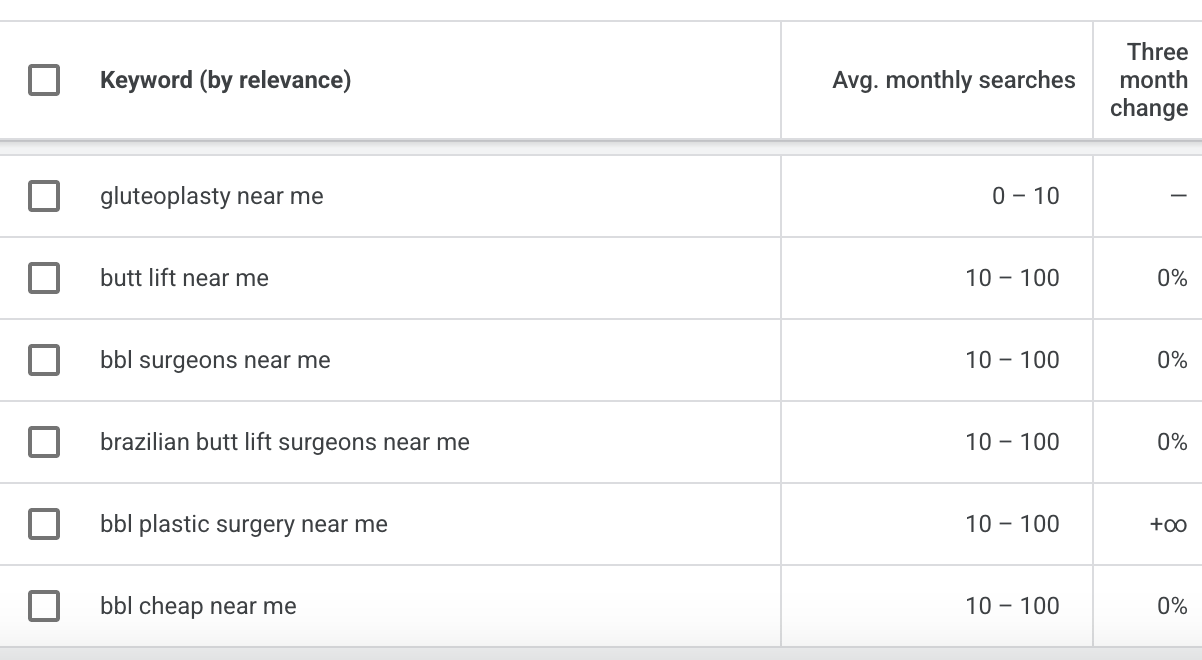
As Burnaby area search data indicates, most people reference gluteoplasty as “butt lift” and “BBL”. So when we discuss a corresponding rise in local search for butt lift injury repair we’re not being cheeky. It’s just the words people use when seeking help for BBLs gone wrong. While most of these cosmetic surgeries come without complications, those seeking “cheap” procedures may indeed experience musculoskeletal and neuromuscular issues in the aftermath. It’s this group that needs our physiotherapy services. If you’re among them, call 604.558.2273 to book an appointment for a confidential, non-judgemental assessment, or read ahead first for more information.
Overview of Absolute PhysioCare Gluteoplasty (musculoskeletal and neuromuscular) Injury Repair Services in Burnaby Vancouver BC
Types of Injuries Sustained from Gluteoplasty (and how physio will help)
Muscle Trauma and Atrophy
Direct muscle trauma and atrophy following a gluteoplasty can occur when the gluteal muscles are disrupted during surgery, leading to pain, weakness, inflammation, and loss of muscle mass due to reduced activity during recovery. BBL procedure patients may experience difficulty sitting, walking, climbing stairs, or maintaining balance and hip stability. Physiotherapy plays a key role in butt lift injury rehabilitation by using targeted strengthening exercises, soft tissue therapy, stretching, posture correction, and gradual functional training to restore muscle activation, improve circulation, reduce stiffness, and rebuild gluteal strength. A structured rehabilitation program can help clients regain mobility, improve pelvic stability, and safely return to normal daily activities and exercise.
Compromised Gait and Function
Gait and functional issues following a gluteoplasty can arise due to post-operative pain, swelling, muscle inhibition, or altered activation of the gluteal muscles, often leading to limping, reduced stride length, pelvic instability, and difficulty with activities such as walking, stair climbing, and standing from a seated position. These compensatory movement patterns may persist if not addressed early, potentially causing secondary strain on the lower back, hips, and knees. Physiotherapy helps correct these issues by retraining proper movement mechanics, restoring gluteal muscle activation, improving strength and flexibility, and enhancing balance and coordination. A progressive rehabilitation program focuses on normalizing gait patterns, reducing compensations, and safely rebuilding functional capacity for daily activities and exercise. Custom orthotics may also be required to correct an individual’s new (post-BBL) gait.
Deep Gluteal Pain Syndrome
Deep Gluteal Pain Syndrome (DGPS) following a gluteoplasty can occur when post-surgical swelling, scar tissue formation, or altered hip mechanics contribute to irritation or compression of deep structures in the gluteal region, such as the piriformis and surrounding soft tissues. This may result in persistent buttock pain, discomfort when sitting, radiating pain into the posterior thigh, and reduced hip mobility. Physiotherapy can help manage this butt-lift injury by reducing muscle tension, improving soft tissue mobility, and restoring optimal hip biomechanics through targeted stretching, manual therapy, and progressive strengthening of the gluteal and core muscles. A structured rehabilitation program also focuses on correcting movement patterns, improving posture, and gradually reintroducing functional activities to reduce symptom recurrence and support long-term recovery.
Gluteal Tendon Damage & Tears
Gluteal tendon damage or tears following a gluteoplasty may occur due to surgical trauma, excessive tension on the gluteal musculotendinous unit, or altered biomechanics during recovery, leading to lateral hip pain, weakness, difficulty with weight-bearing, and impaired stability during walking or stair climbing. Sufferers may also experience pain when lying on the affected side or performing single-leg activities. Physiotherapy is essential in rehabilitation, focusing on pain reduction, controlled loading of the gluteal tendons, and progressive strengthening of the gluteus medius and maximus to promote tendon healing and restore function. BBL injury treatment may include isometric and eccentric exercises, gait retraining, soft tissue techniques, and balance training to improve hip stability and reduce stress on the injured tendons.
Absolute PhysioCare offers the most comprehensive suite of solutions for Burnaby and Greater Vancouver BC area individuals seeking therapy to restore function after an injury sustained due to a gluteoplasty. Reach out via your preferred form of contact provided below.
RECOVERY FROM GLUTEOPLASTY RELATED INJURY
(Burnaby area residents)
CALL: 604.558.2273
EMAIL: [email protected]
(get directions)